01
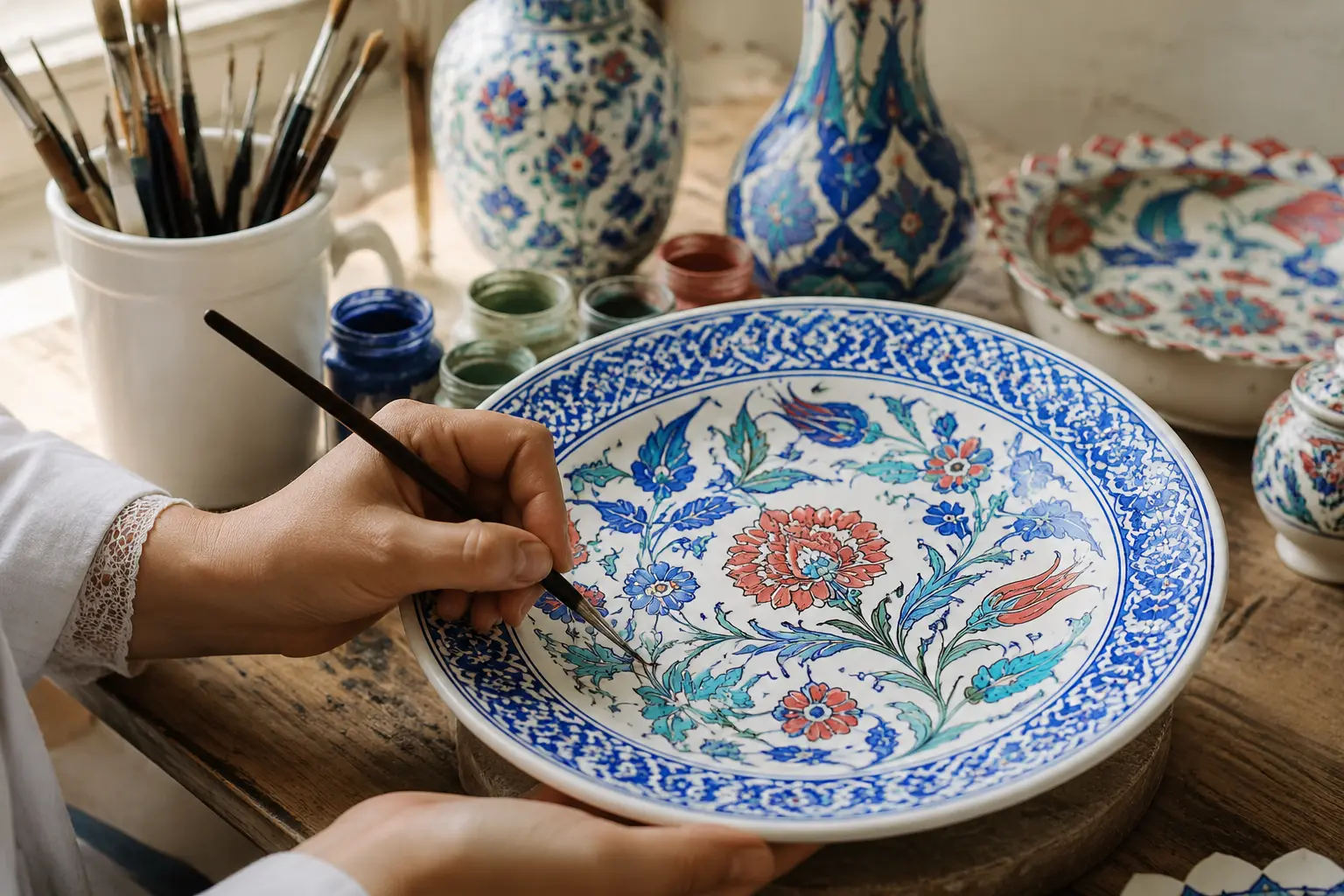
A surface can carry a whole garden
Tulips, carnations, saz leaves and scrolling stems transformed architectural tilework into fields of color. The best-known İznik traditions developed a visual language that is immediately recognizable but endlessly varied.
02
Historic tile and contemporary pottery are not the same thing
Museum objects, architectural tiles and new workshop pieces belong to different contexts. A thoughtful demonstration should explain materials, firing and design without presenting every modern souvenir as an antique tradition unchanged.
03
Meet the craft before choosing a piece
A workshop visit can become a lesson in brush control, clay, glaze and kiln work. Buying is never required; understanding the handwork is already a worthwhile part of the encounter.
Sources and further reading
We prioritize official site authorities, excavation teams, universities, peer-reviewed research and established museum collections.
Continue planning
Add local flavor to a private Ephesus day
How this story connects to your day
Related destination: Ephesus, Selçuk and Kuşadası. Choose only the places that matter to you, or ask our Kuşadası team whether this story works best on the same day or a second day.
Frequently asked questions
Are all blue-and-white ceramics İznik?
No. İznik identifies a specific historical production tradition; many contemporary works take inspiration from it.
Can a ceramic workshop be added to the day?
Yes, when time and interest allow. Add the request in your notes so the route can be checked.